Buyer guide

How to choose a bottle labelling machine.

Choose the labeller by container shape, label position, label material, speed target and integration requirement.

Need a bottle labelling machine specified quickly? Send bottle dimensions, label size and output target.

Request specification adviceCall 01494 623015

1. Start with the container shape

Round bottles, jars and cans usually suit wraparound labelling. Flat, oval and square bottles usually need front and back labelling. Cartons, sleeves and trays may need top and bottom application.

2. Confirm the label position

Decide whether the pack needs a full wrap, partial wrap, front label only, front and rear labels, top label, bottom label or a combination of positions.

3. Check the label material

Paper labels, film labels and transparent labels can need different sensors and machine settings. Clear labels should always be checked with samples before final specification.

4. Match the automation level to output

Bench-top semi-automatic labellers are useful for short runs and startups. Compact automatic machines support growing production. Inline automatic labellers suit consistent higher-output lines.

5. Plan line integration early

Conveyor height, filling and capping equipment, date coding, barcode inspection and downstream handling should be considered before the labeller is ordered.

6. Send the right information

A faster and more accurate recommendation needs container dimensions, label size, roll direction, backing material, target output, product photos and any line layout constraints.

Speak to Lancing

Need a machine recommendation?

Send your bottle dimensions, label size, label material and output target. Lancing will advise whether wraparound, front/back, top/bottom, compact or semi-automatic labelling is most suitable.

Practical checklist

Selector checks to confirm before choosing the machine route.

Bottle shape, label material, desired presentation and line integration all affect the correct machine route. Use the checklist below to move from a general labeller enquiry to a machine recommendation that can be sample tested.

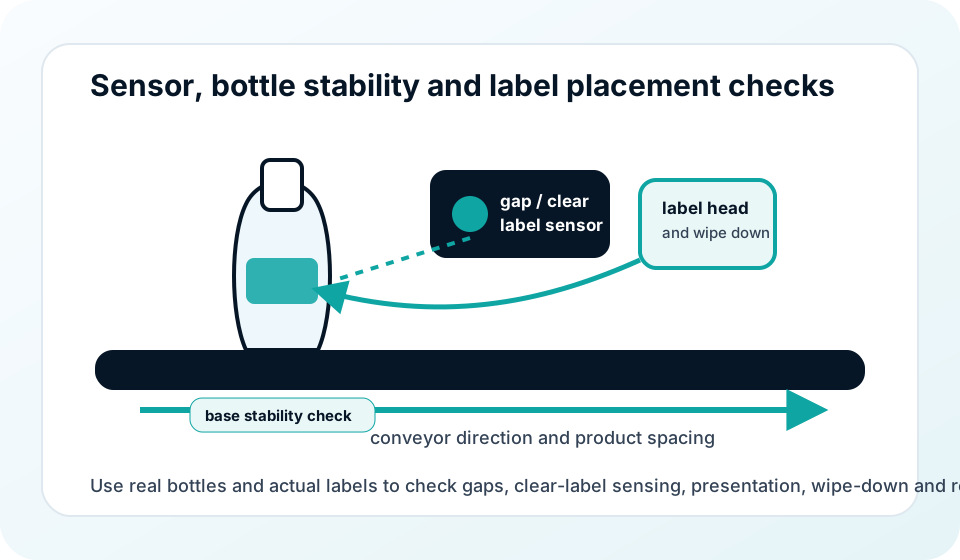
Diagram showing bottle labelling sensor and stability checks

Information gain for a faster answer

  • Container: diameter or panel width, height, material, base shape, taper, shoulder shape and whether the container is empty or filled during labelling.
  • Label: width, length, gap, roll direction, core diameter, liner type, transparent/opaque material and whether overprinting is required.
  • Line: target output, operator involvement, conveyor direction, available space, coding position and any upstream filling or capping equipment.
QuestionEngineering reasonNext action
Is the container round, flat, oval, square or tapered?Shape determines whether rotation, side guiding or top/bottom transfer is the main control point.Compare machines
Is the label clear, metallic, small, wraparound or front/back?Label material and gap determine sensing and setup checks.Review sensing
Has the label roll already been printed?Roll direction and artwork orientation may affect machine compatibility.Check roll direction
Is presentation critical?Premium labels, front/back matching and clear labels should be checked with samples before final specification.Prepare samples

For round bottles, start with wraparound labelling. For flat, oval and square containers, review front and back labelling. When in doubt, send photos and dimensions and Lancing can identify the better machine route.

Ready to have a labelling project checked?

Send bottle samples, label details or photos and the production target so Lancing can narrow the route.

Send specification details

Selection questions

Questions that make machine comparisons more reliable.

A useful comparison starts with one application brief and tests how each proposed machine controls the same bottles, labels and line conditions. Browse the bottle labelling questions hub for deeper technical answers.

How should a buyer compare two machines that use different handling methods?

Compare how each system presents the bottle, controls label dispense, completes wipe-down and manages the required format changes. Ask both suppliers to demonstrate against the same samples and acceptance criteria. A faster or simpler mechanism is not automatically better if it does not control the most demanding pack.

Which current and future formats belong in the selection brief?

Include all current production formats and future packs that are sufficiently defined to provide dimensions, samples or drawings. Identify the extremes and the formats most likely to challenge stability, sensing or placement. The guide to multiple-format capability helps set a realistic boundary.

What should be agreed before asking suppliers to state placement performance?

Agree the bottle datum, label measurement points, sample condition, running state and method used to judge repeatability. Without those conditions, an accuracy figure can be interpreted in different ways. Use the placement-tolerance guide to prepare the statement.

Which integration questions should be answered before the machine footprint is fixed?

Confirm product direction, conveyor height, access, accumulation, upstream and downstream stop behaviour, coding, inspection, reject handling and operator space. These interfaces can change the practical machine layout even when the labelling method is already selected. See integrating a bottle labeller with a packaging line.

Use one evidence pack to compare every proposed machine.

Lancing can review bottles, label rolls, drawings, format priorities and line interfaces before the machine route is confirmed.

Discuss your application
Technology choice

Choose the label method before deciding how automatic the machine should be.

Automation level answers who loads the product and how it moves through the line. It does not decide whether the pack should use pressure-sensitive labels, a shrink sleeve or a wet-glue process. Resolve the decoration method first, then compare manual, semi-automatic, compact and inline equipment within that route.

Self-adhesive

Strong for changing formats, front/back or wraparound labels, clear-label sensing and integration with coding or inspection.

Shrink sleeve

Review when the design needs high coverage, complex shape-following or a sleeve-based tamper-evident format.

Wet glue

Review for stable paper-label and bottle formats where the glue and cleaning process suits the production model.

Open the full bottle labelling method comparison before requesting machine quotations.

Shortlist the process before the machine model.

Send the required decoration, pack shape, format range, batch pattern and line utilities.

Review the process choice
Before the shortlist

Complete three practical calculations before comparing machine quotations.

The calculations do not select the machine automatically, but they remove ambiguity from the bottle, label and output brief.

1. Label path or panel

For a true round bottle, calculate or measure the circumference at the label zone. For flat, oval or shaped containers, record the usable panel and orientation datum instead.

Calculate label dimensions

2. Active running rate

Convert batch size and available production hours into a running requirement that allows for planned productive time, roll changes and format changes.

Calculate the running-rate requirement

3. Format-change burden

List how many bottles, labels and artworks change, how often they change and which settings, guides, rolls or inspection recipes must be recovered.

Open the changeover checklist

Use the same completed brief for every machine route.

This makes automatic, compact and semi-automatic alternatives easier to compare on the real application.

Send the completed brief

Popular searches

Bottle labelling machine pages built around common buyer searches.

Selection sequence

Use a pack-first decision sequence before choosing a machine.

The same output target can point to different labellers when bottle stability, label construction or the required presentation changes. Work through the decisions in order so the shortlist is based on the real pack rather than a broad machine name.

DecisionWhat to recordMachine consequenceDetailed page
Container shape and usable label panelRound, flat, oval, square, tapered or irregular; panel width; height; base stability; surface condition.Determines whether the main control is bottle rotation, side presentation or top/bottom product transfer.Compare machine routes
Label arrangementFull wrap, partial wrap, one panel, front/rear, top/bottom or multiple positions.Defines the number and position of label heads and whether the product must rotate or remain orientated.Wraparound or front/back
Label-roll constructionFace material, liner, web width, core, roll diameter, unwind direction, gap, artwork leading edge and transparency.Determines reel handling, web path, sensing and dispense setup.Roll direction guide
Pack presentationFilled or empty, cap or pump fitted, bottle spacing, line direction, current conveyor and upstream machine.Determines product separation, guides, top-hold, conveyor interfaces and footprint.Conveyor integration
Changeover familySmallest, largest and most difficult container and label, plus frequency of format changes.Determines adjustment range, recipe needs, change parts and the practical operator process.Testing checklist
Coding and inspectionCode content, print area, print stage, barcode or presence checks and reject requirement.Determines space, controls and whether a separate specialist print-and-apply route is more appropriate.Coding integration guide

When more than one machine route may work

A round bottle with one wrap label has a clear wraparound route, but a round bottle carrying two separate labels can require a more detailed review. The labels may be supplied alternately on one roll, on two independent rolls or with a required relationship to a bottle feature. Output, operator involvement and registration expectations then determine whether a semi-automatic, compact automatic, wraparound or twin-side configuration is the more practical option.

A flat or oval bottle may appear straightforward until its panel tapers, the base rocks or a pump head changes orientation. Send the finished pack rather than an empty shell whenever the product weight or closure affects handling.

Quotation-ready evidence

  • Photographs from the front, rear, side and above, with a ruler or drawing for scale.
  • The smallest, largest and least stable production containers.
  • Production-equivalent labels or a complete roll specification before labels are printed.
  • A marked sample showing required label height, front datum, overlap, gap or front/rear relationship.
  • Target output, batch sizes, changeover frequency and a sketch of the available line space.
  • Coding, inspection, reject, guarding and operator-access requirements.

Do not use catalogue speed as the first filter

Published output does not describe how an unstable bottle, demanding clear label, long wrap, frequent changeover or manual upstream process will behave. Establish the real pack and operating conditions before comparing throughput.

Do not approve printed rolls in isolation

Artwork orientation, unwind direction, core and web width should be checked against the intended machine. When labels are clear, metallic or unusually shaped, reserve enough production-equivalent material for sensor and dispense testing.

Send the decision evidence, not just a machine name.

Lancing can use the container, label and line information to identify the correct owner page and machine route without creating a competing or unsuitable specification.

Send selection details
Procurement path

Use one evidence chain from shortlist to handover.

The buyer guide establishes the machine route. The next decisions are the label-roll specification, trial evidence, site preparation, commissioning and operator handover.

1. Fix the label-roll data

Complete size, pitch, web, core, winding, liner and sensing information with the label-roll worksheet.

2. Agree acceptance evidence

Define representative samples, placement standard and changeovers with the FAT checklist.

View all bottle labelling technical guides and checklists.