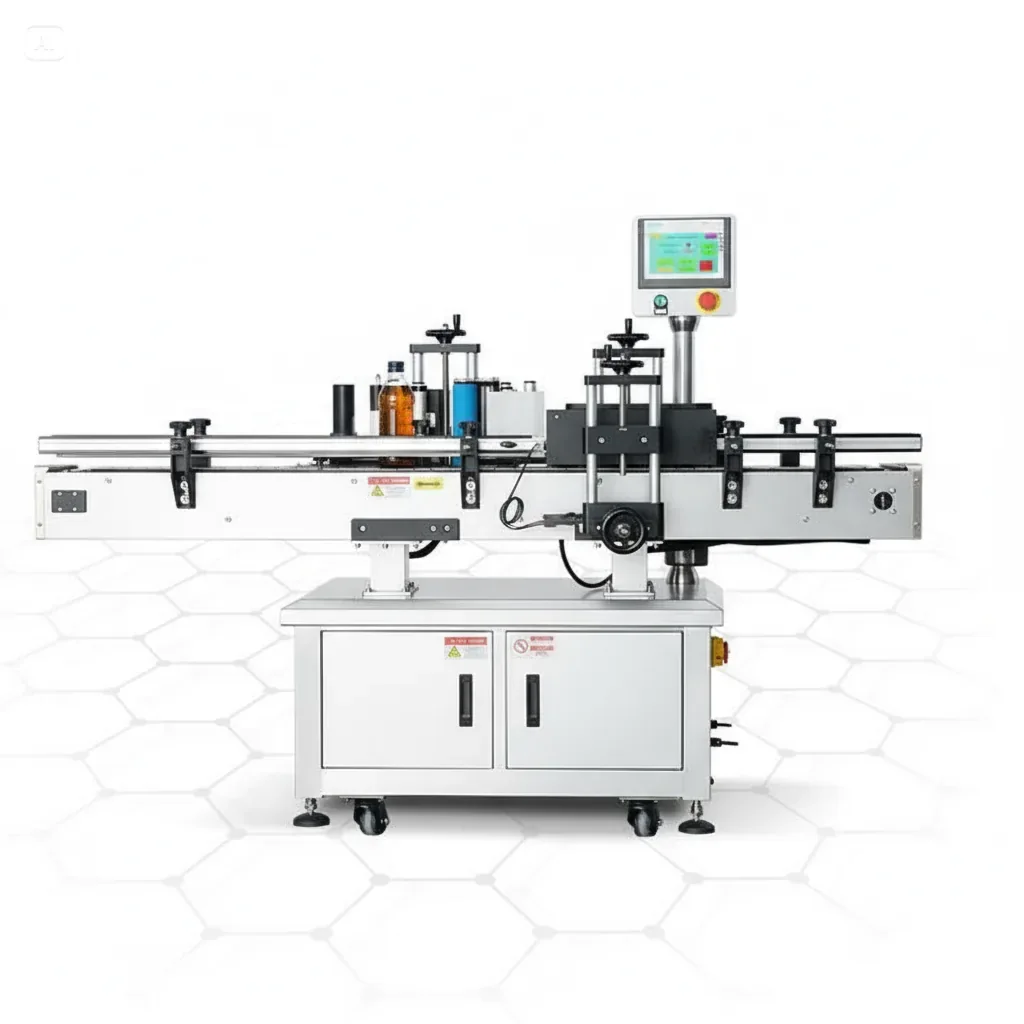
Automatic bottle labeller
Automatic Wraparound Labeller
For cylindrical bottles, jars and cans requiring inline wraparound labelling.
View machine
Bottle labelling machines UK
Automatic bottle labelling machines for producers needing consistent label placement, conveyor integration and higher daily output.
Choosing a bottle labeller is mainly about container geometry, label position and production flow. Round bottles normally use wraparound labelling. Flat, oval and square containers normally need twin-side front and back labelling. Cartons, trays and flat packs can require top, bottom or top-and-bottom label application. Lancing can review samples, drawings and photographs before recommending the most suitable system.
Options include semi-automatic bench labellers, compact automatic labellers, automatic wraparound systems, twin-side front/back labellers and top/bottom label applicators. Lancing can also consider conveyors, coding, filling and capping integration where required.
Recommended options
Use these routes to compare the main equipment types before requesting a final specification.
Automatic bottle labeller
For cylindrical bottles, jars and cans requiring inline wraparound labelling.
View machine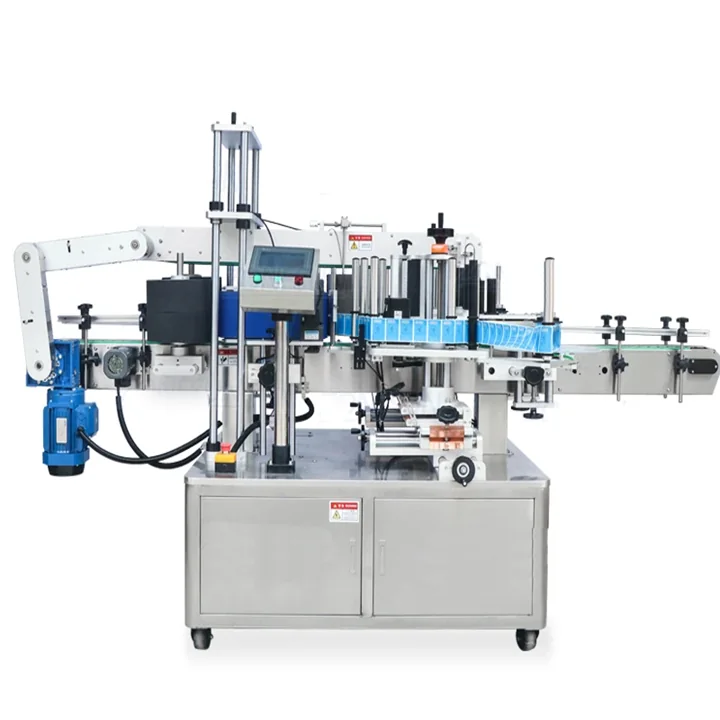
Front and back labelling
For oval, flat, square and shaped containers needing two-sided presentation.
View machine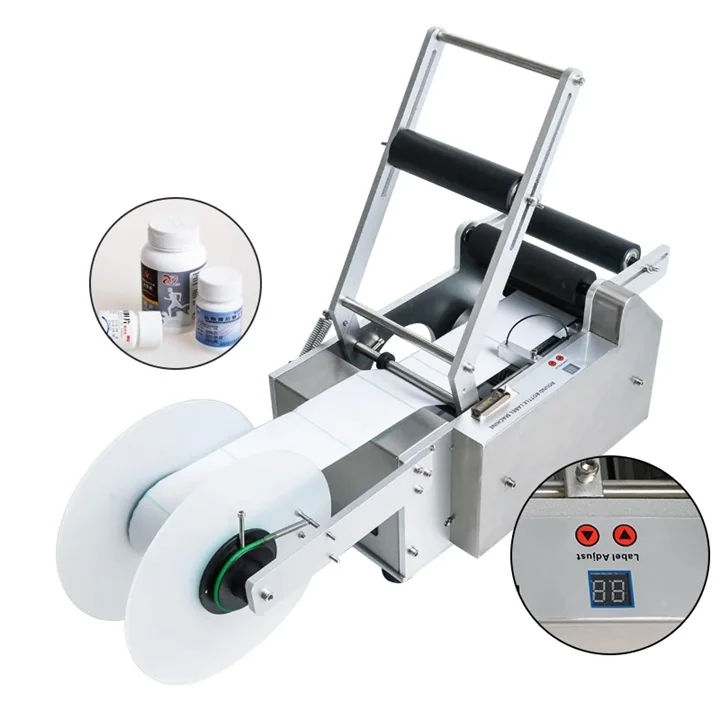
Bench-top labelling
For short runs, lower output and simple round bottle label application.
View machineBuyer questions
The shape decides whether the application is wraparound, front/back, side, top/bottom or a special handling system.
Transparent labels and certain materials may need different sensing and should be tested with the real roll.
Semi-automatic machines suit smaller batches. Automatic systems suit conveyors and repeatable production.
Many bottle labelling lines also need coding, reject, spacing, conveyors or integration with filling and capping.
Popular searches
Automatic operation depends on product spacing, upstream and downstream stop logic, guarded access, restart behaviour, recipes, fault handling and the ability to recover without losing label control.
Define speed-following, accumulation, stop signals, emergency-stop boundaries and what happens to bottles already inside the controlled labelling zone.
Use the most difficult bottle, label and changeover combination at FAT and carry the same evidence into site commissioning.
Agree the intended use, instructions, safety information, training, open actions and modification control before handover.
Use the UK compliance and documentation guide alongside the conveyor integration guide.
Send the line layout, control interfaces, container range, labels and site acceptance requirements.