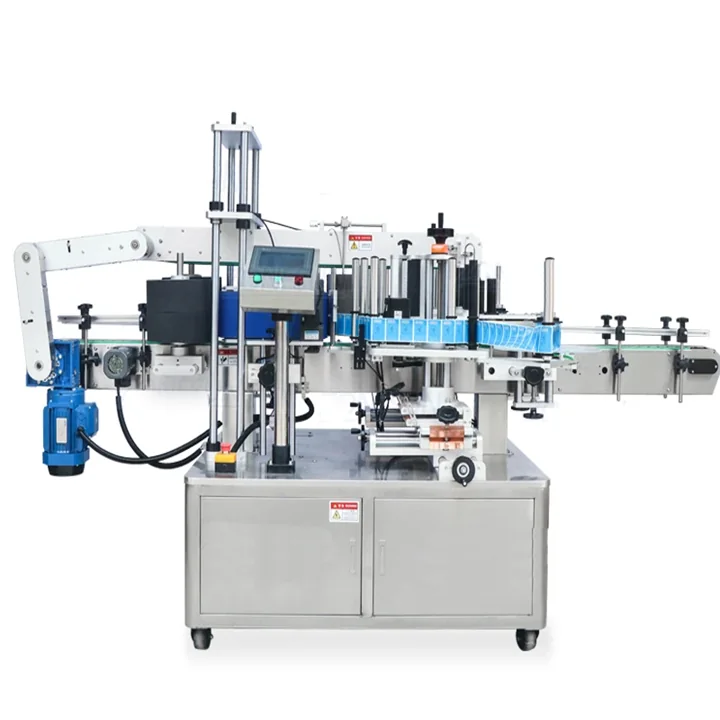
Front and back labelling
Automatic Twin Side Labeller
Automatic front and back labelling for flat, oval, square and selected round containers requiring two labels in one pass.
View machine
Machine category
Twin-side systems apply labels to opposite faces of a container during one pass, supporting brand labels, ingredient panels, barcodes and compliance information.
Need a bottle labelling machine specified quickly? Send bottle dimensions, label size and output target.
Request specification adviceCall 01494 623015Options
Each machine is configured against real samples, label rolls and production requirements.
Front and back labelling
Automatic front and back labelling for flat, oval, square and selected round containers requiring two labels in one pass.
View machine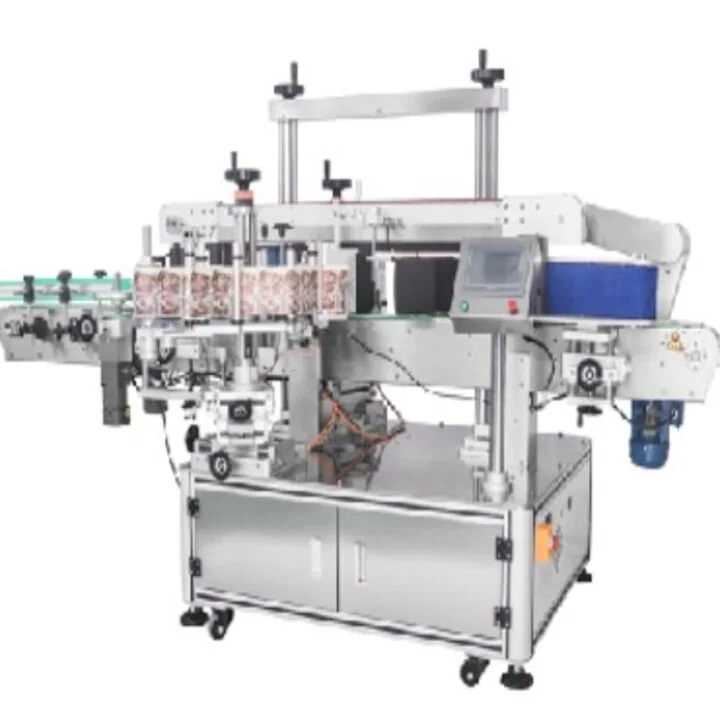
Compact front/back labelling
Compact twin-side label application for lower-volume production, trials and factories with limited floorspace.
View machine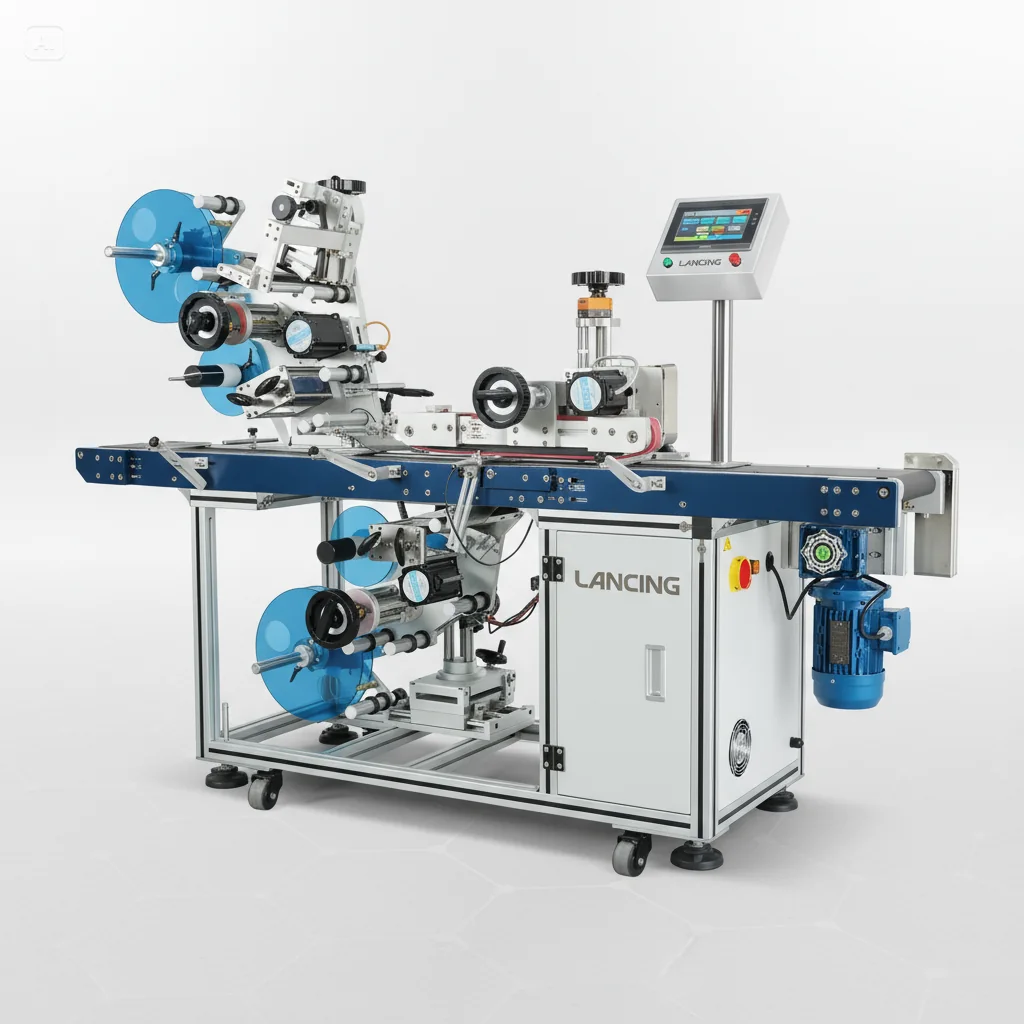
Top and bottom labelling
Automatic top/bottom labelling for flat products, boxes, trays and retail-ready packs requiring labels on both faces.
View machineShape, size, taper, panel area and stability determine the handling system.
Label material, backing paper, gap, transparency and size determine the sensing and dispense setup.
Conveyor height, coding, inspection and existing line equipment are reviewed before quotation.
Buyer questions
Round bottles usually need wraparound labelling, while flat, oval and square bottles normally need front and back labelling. Top and bottom labelling is used for cartons, trays, sleeves and flat packs.
Yes. Lancing supplies automatic wraparound, automatic front and back, compact and top and bottom labelling systems for UK production lines.
Clear labels can usually be applied when the labeller is fitted with suitable transparent-label sensing and is tested against real label rolls and samples.
Send container dimensions, photos, label size, label material, label roll direction, target output and details of any filling, capping, coding or conveyor equipment.
Speak to Lancing
A short specification review avoids choosing the wrong labelling format and helps confirm speed, handling and options.
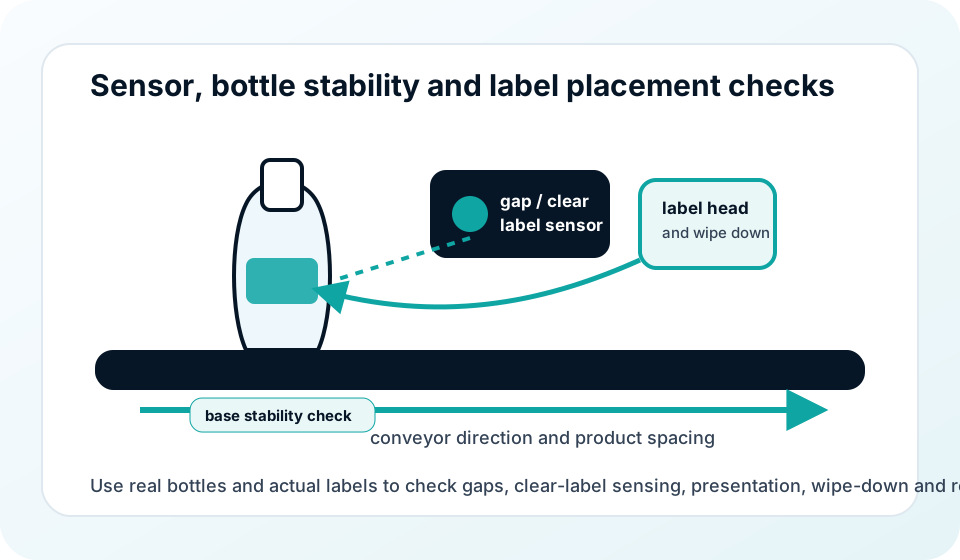
Two-sided bottle labelling is mainly a product control problem: the container must present consistently as it passes both label heads, and the front and back labels must be matched to the visible panels.
Flat and oval bottles can vary in panel size, taper and shoulder shape. The machine needs to guide the bottle without marking it, and the label heads need to apply the front and rear labels at the right height and position. Clear labels, textured bottles and flexible plastic packs should be reviewed with the actual samples.
| Container presentation | Likely route | Important checks | Next page |
|---|---|---|---|
| Flat or rectangular bottle | Twin-side front/back labeller | Side guides, label height, front/back matching. | Automatic twin-side labeller |
| Oval cosmetic or personal-care bottle | Front and back labelling with sample testing | Panel curvature, wipe-down pressure, label material. | Positioning guide |
| Lower volume two-sided work | Compact front/back labelling | Container support, operator access and changeover. | Compact twin-side labeller |
If the container may suit either wraparound or front/back application, compare the decision points in the wraparound vs front/back guide. For presentation-critical packaging, use the sample testing checklist before confirming print quantities or machinery specification.
Send bottle photos, front/back label artwork, label roll details and any required coding position.
Front and back questions
Two label heads can apply in one pass only when the bottle is presented consistently and both label positions are defined from a common reference. Browse the bottle labelling questions hub for deeper technical answers.
Side guides, stabilising belts or other product-control devices keep the bottle face aligned as it passes the two label heads. The setup must suit the real container width, shoulder shape, rigidity and centre of gravity. If the pack can yaw, squeeze or roll between contact points, front-to-back registration may change even when each head dispenses accurately.
Define a bottle datum and state how each label is positioned from it, then define the permitted relationship between the two labels. An approved sample or drawing should show vertical position, side-to-side position and any required alignment of artwork features. The placement-tolerance guide sets out a clear method.
A squeezable bottle can deform under guide or belt pressure, especially when empty or partly filled. That deformation changes the apparent panel position and can also alter adhesion at the edges. Trials should use the intended fill state and the lowest practical handling pressure that still controls the pack.
Wraparound may be preferable when the container is truly cylindrical, the design can be supplied on one label and controlled rotation gives the required presentation. Separate front and rear labels are usually more appropriate when distinct panels, different artworks or shaped faces must be targeted. Compare both routes against the bottle rather than the artwork alone.
Provide samples, photographs, front and rear label rolls and a marked pack or drawing showing the required relationship.
Front and back labelling is strongest where two panels, separate artworks or clear gaps between labels support the pack design. A full-body shrink sleeve or another process may be better where decoration must follow a complex shape or cover most of the container.
The bottle provides repeatable panels, both label datums can be defined and frequent format or artwork changes favour pressure-sensitive rolls.
The container is cylindrical and one continuous label, partial wrap or controlled overlap provides the required presentation.
The decoration must follow compound curves, cover most of the bottle or combine the label with a tamper-evident format.
Use the bottle labelling method comparison before artwork and consumable specifications are fixed.
Send bottle drawings or samples, front and rear artwork, gap requirements and the expected format range.
Front and back labelling depends on the relationship between the pack, its orientation feature and both artworks. The brief should identify where the bottle is located, where each label begins and how the front-to-back relationship will be judged.
| Measurement | Record | Acceptance question |
|---|---|---|
| Usable panel | Width and height of the stable panel, including clearances from radii, handles, mould lines and ribs. | Can the complete label remain on a repeatable surface? |
| Orientation datum | Handle, flat, seam, embossed feature, closure feature or another repeatable reference. | Can the bottle be presented consistently before the first label head? |
| Front/rear relationship | Target angular relationship, panel centres, permitted gaps and the visual method used to judge alignment. | Will both labels remain acceptable across the actual bottle variation? |
| Barcode location | Which label carries the barcode, its orientation and the flat or consistently curved area available. | Can the code be applied and inspected without wrapping onto a tight curve or edge? |
Use the measurement guide to record usable panel dimensions and the front and back positioning guide to define the datum and test method.
Include filled samples, panel dimensions, the expected front/rear relationship and any barcode or coding position.
Popular searches
Two label heads do not by themselves guarantee a matched front and rear presentation. The container must enter squarely, remain controlled between both application points and present repeatable panels to each label head.
Mark the required front-label centreline, rear-label centreline, label height and the acceptable visual relationship between them. On an oval, rectangular or panelled bottle, the usable face may be narrower than the maximum bottle width. Curved edges, recessed panels, handles and mould features can reduce the safe label area.
Guide rails, product separation and any top-hold or stabilising belt must keep the bottle from yawing as it passes the first and second label heads. The label wipe method must suit the surface without squeezing or marking the container. If labels are transparent, each head may require sensing proven against its own roll.
For a commercial machine comparison, review the Automatic Twin Side Labeller and Compact Twin Side Labeller. Round containers with a single wrap label should remain on the wraparound route.
| Observed result | Likely control area | What to provide for review |
|---|---|---|
| Front and rear labels move together around the pack | Container orientation before the first head, product spacing or bottle rotation through the machine. | Video of the infeed, an unlabelled sample and the required front datum. |
| One label is correct but the other is consistently offset | Individual label-head position, dispense point, label artwork orientation or roll setup. | Both label rolls, labelled samples and a marked-up drawing of the desired positions. |
| Label height varies | Bottle base variation, conveyor support, guide contact, label-head height or bottle lean. | Several bottles from normal production rather than one ideal sample. |
| Labels skew across a flat or oval panel | Pack not square to the conveyor, panel taper, side pressure, wipe-down angle or a label wider than the stable face. | Panel measurements at label height and photographs from front, side and above. |
| Registration changes after a format change | Changeover references, recipe selection, guide positions or unrecorded mechanical settings. | The format list, changeover sequence and an approved sample for each product. |
Supply the smallest, largest and least stable bottle, together with both production-equivalent label rolls. Include filled samples when product weight changes handling. Where pumps or trigger heads are fitted before labelling, send the finished pack configuration.
Agree the front and rear height datum, centreline relationship, edge clearances, appearance through curved panel transitions and the changeover formats to be demonstrated. Placement should be judged against the actual variation in containers and labels supplied for the project.
Use the front/back positioning guide to prepare the layout and the sample-testing checklist before final specification. For dedicated specialist coverage, see Lancing's front and back labelling website.
A marked bottle, both label rolls and a simple dimensional drawing make registration requirements much clearer than artwork alone.
Front and rear labels should be assessed as one presentation. Bottle orientation, panel shape, two independent rolls and the reference used for the first label can all affect the final relationship.
| Check | Evidence | Reason |
|---|---|---|
| Orientation datum | Defined front face, seam, handle, pump or other repeatable reference. | Keeps both labels related to the intended pack presentation. |
| Panel suitability | Filled samples showing taper, curvature, recess and sidewall flexibility. | Confirms the usable label area and product support. |
| Two roll specifications | Front and rear label dimensions, web, core, winding, liner and artwork orientation. | Prevents a mismatch between independently supplied reels. |
| Approved relationship | Marked or labelled pack showing label heights, centring and front/rear alignment. | Creates one acceptance reference for both heads. |
Use the positioning guide, changeover checklist and surface and adhesion guide.