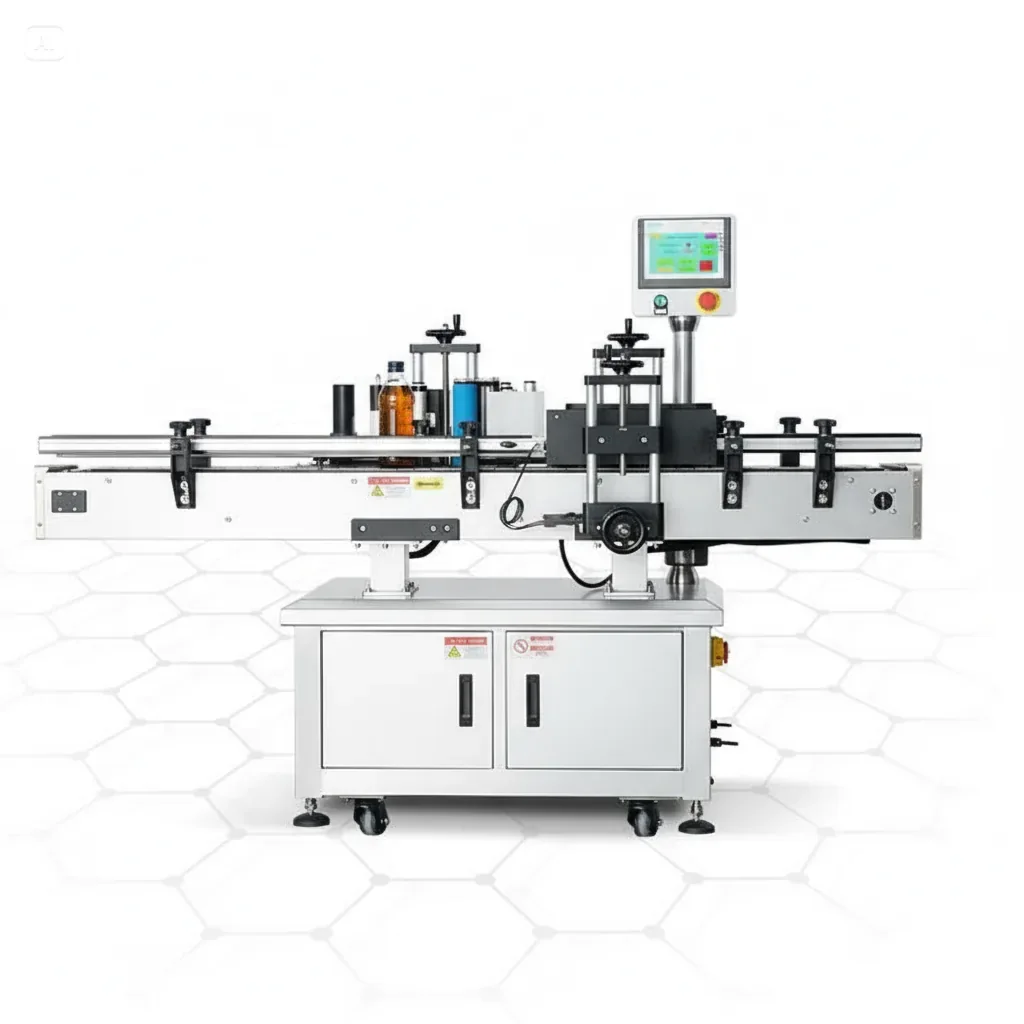
Round bottles
Automatic Wraparound Labeller
Inline label application for cylindrical bottles, jars and cans.
View machine
Clear label bottle labellers
Specify transparent label sensing and setup for no-label-look packaging on bottles and jars.
Clear labels can be more demanding than paper labels because standard label sensors may not reliably detect the label edge. The correct sensing method should be reviewed against actual label rolls and backing paper.
The bottle shape still determines the labeller route: wraparound for many round containers and front/back labelling for flat, oval or panelled packs.
Options include semi-automatic bench labellers, compact automatic labellers, inline wraparound systems, twin-side front and back labellers, top and bottom label applicators and integrated conveyor systems. The correct route depends on container shape, label position and production target.
Recommended routes
Select the closest machine route below or send samples for a final specification.
Round bottles
Inline label application for cylindrical bottles, jars and cans.
View machine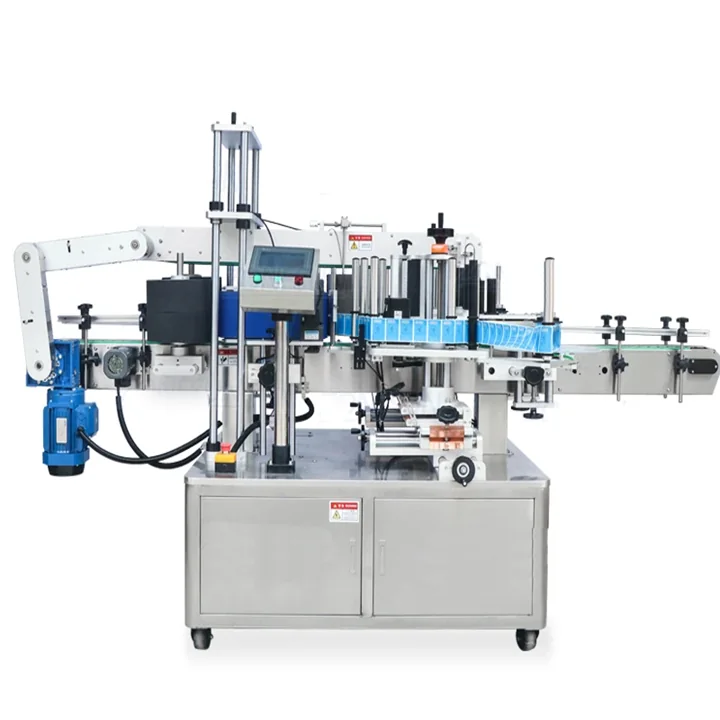
Two-sided labels
Front and back labelling for flat, oval, square and shaped containers.
View machine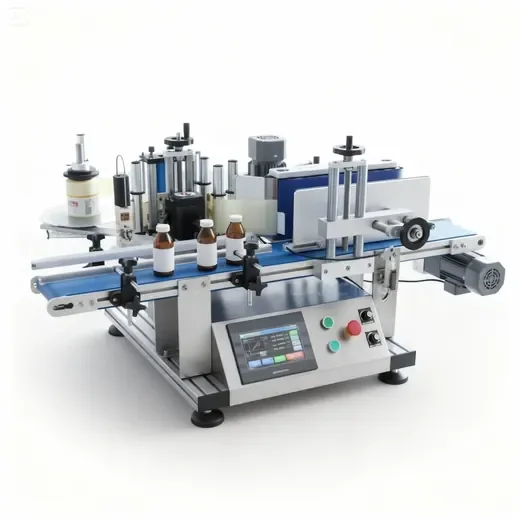
Compact automatic
A compact route for repeatable wraparound bottle and jar labelling.
View machineBuyer questions
The suitable route depends on container shape, label position, label roll, required output and whether the machine is bench-top, compact automatic or fully inline.
Bottle or container dimensions, photographs, label size, roll direction, label material, target output and any coding or conveyor requirements are useful for a fast recommendation.
Clear labels may be possible when suitable transparent label sensing is specified and tested against the real label material and backing paper.
Automatic systems can usually be specified with conveyors and surrounding filling, capping, coding or inspection equipment when line details are supplied.
Related searches
A sensor can detect the gap or a registration feature, but the finished result also depends on liner construction, static, bottle surface, first contact, wipe-down, label stiffness, print or varnish and the condition of the bottle at application.
Prove the actual clear label and liner. Do not assume that a sensor which detects one transparent construction will detect every roll.
Dust, moisture, air, surface marks and trapped contamination are more visible under a no-label-look construction.
Cold or condensing bottles need a controlled surface condition and a label construction selected for the real substrate and environment.
Use the clear-label sensing guide, the cold and condensing bottle guide and the label-roll worksheet as one evidence set.
Include filled bottles, liner and label data, bottle condition, placement requirement and any visible appearance standard.